

HEBI Robotics Case Study
Compact Treaded Mobile Manipulator
Uneven terrain has long been a challenge for mobile robotic platforms.
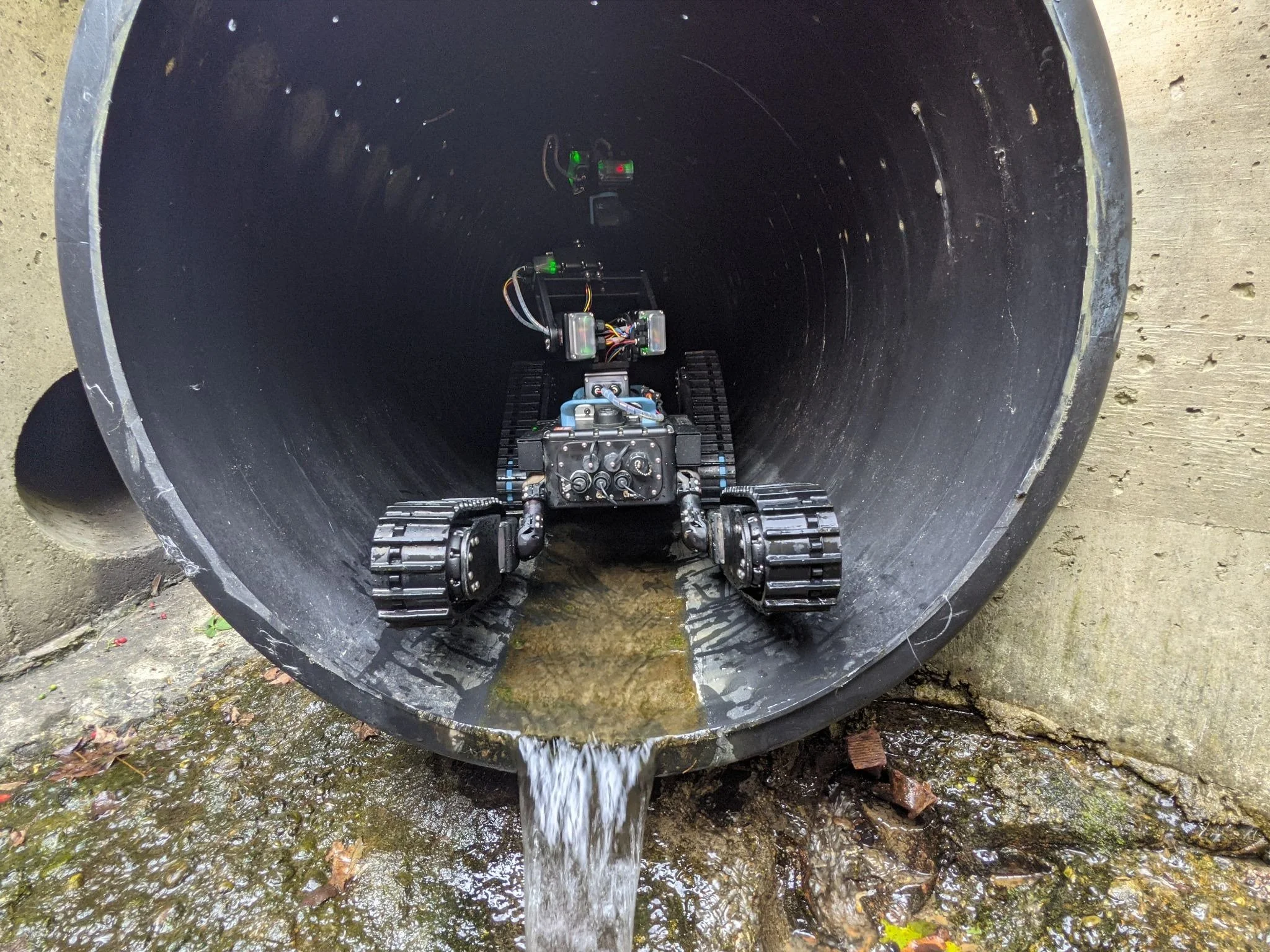
By utilizing HEBI’s modular approach to actuation and mobility, a new treaded platform was developed in months, not years, then deployed to the mountainous terrain of East Asia and beyond.
Download this case study
or continue reading below.
The Opportunity
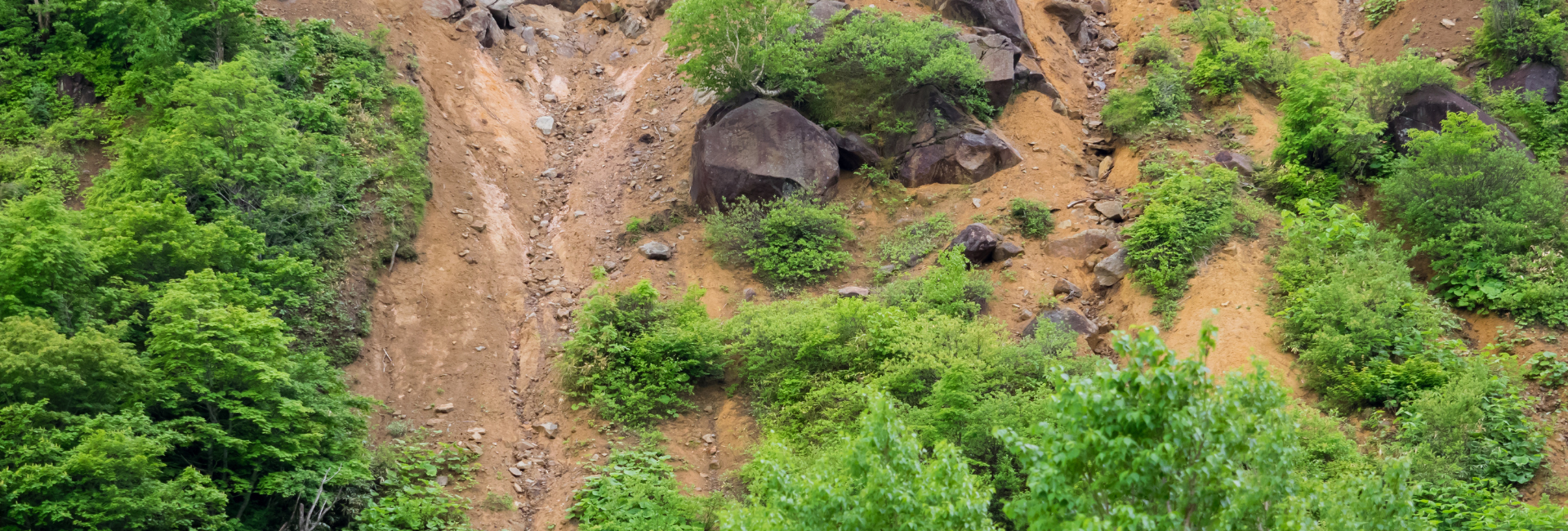
Landslide research represents a series of obstacles for any robot to overcome. Stairs, hills, vegetation, rocks, and potential rubble all make navigation challenging. These real-world issues must be also dealt with while carrying a usable payload of sensors and other gear. A group based in Hong Kong and focused on landslide research reached out to HEBI to discuss the possibility of purchasing a hexapod to replace their prior robotic solution. They had been using a combination of drones (unable to move in dense foliage) and quadrupeds (which struggled with steep stairs and uneven ground) to survey terrain and needed more capability. Reasoning that six legs are more stable than four, they believed HEBI’s Daisy platform could provide the solution to their terrain issues. After a short discussion, the option of a tracked platform (one not yet in existence) was proposed by HEBI engineers.
The Process
The daunting challenge of a tight timeline, restricted budget, and real-world obstacles meant rapid iteration was a requirement. Since treaded platforms offer proven capabilities on shifting surfaces, treads were selected for the platform. Utilizing HEBI’s platform for robot development, HEBI engineers developed a track equipped system to provide the power needed to climb hills and obstacles. Steep 60° slopes and stairways–critical obstacles that prior robots had struggled with–necessitated an elongated design for stability. Additionally, the platform needed to traverse tight corners (such as stairwells) without getting trapped or stuck.
Within weeks, a prototype was developed. With two treaded sections and actuated control over the central joint, the unit could change length by raising the front tracked section to shorten the overall package. In addition, that same movement allowed the tracks to be better positioned to grip and climb over taller obstacles such as curbs.
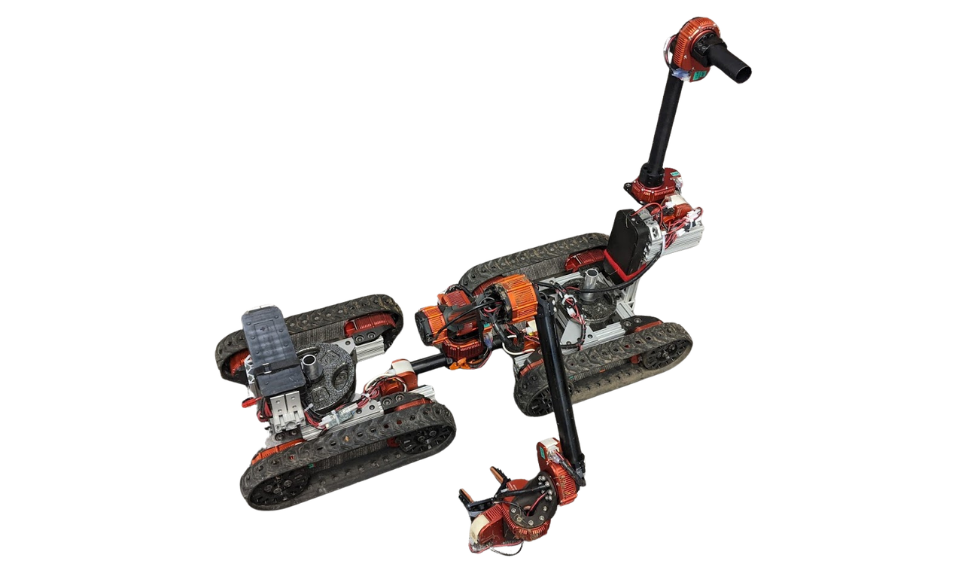
Initial testing proved mixed. The two-body solution still was overly long and did not allow for the even weight distribution preferred for payload delivery.
In response, a flipper-style treaded platform was developed where a central body was equipped with an actuator at each corner to independently control the angle of each treaded flipper. Each flipper, in turn, was given its own actuator for completely independent power delivery and control.
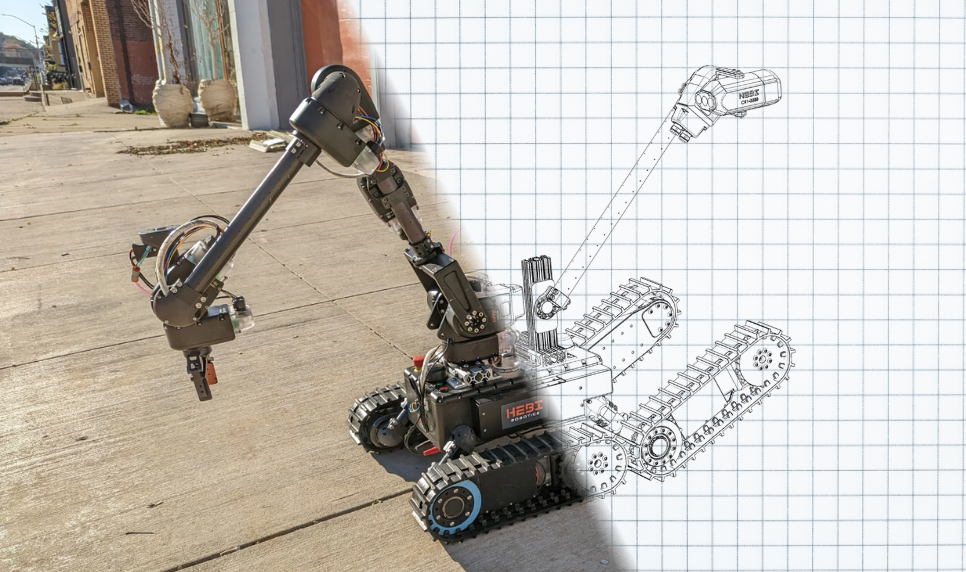
To further ruggedize the platform, HEBI’s outdoor-rated R-Series Actuators were added to the design. Designed to IP67 requirements, these actuators offered increased capability in mud and water. The result emerged as the now-popular Tready mobile platform. As the R-Series are series elastic actuators, they allowed for flexible response to terrain and a resilience to the inevitable shocks and impacts of the real world.
The Result
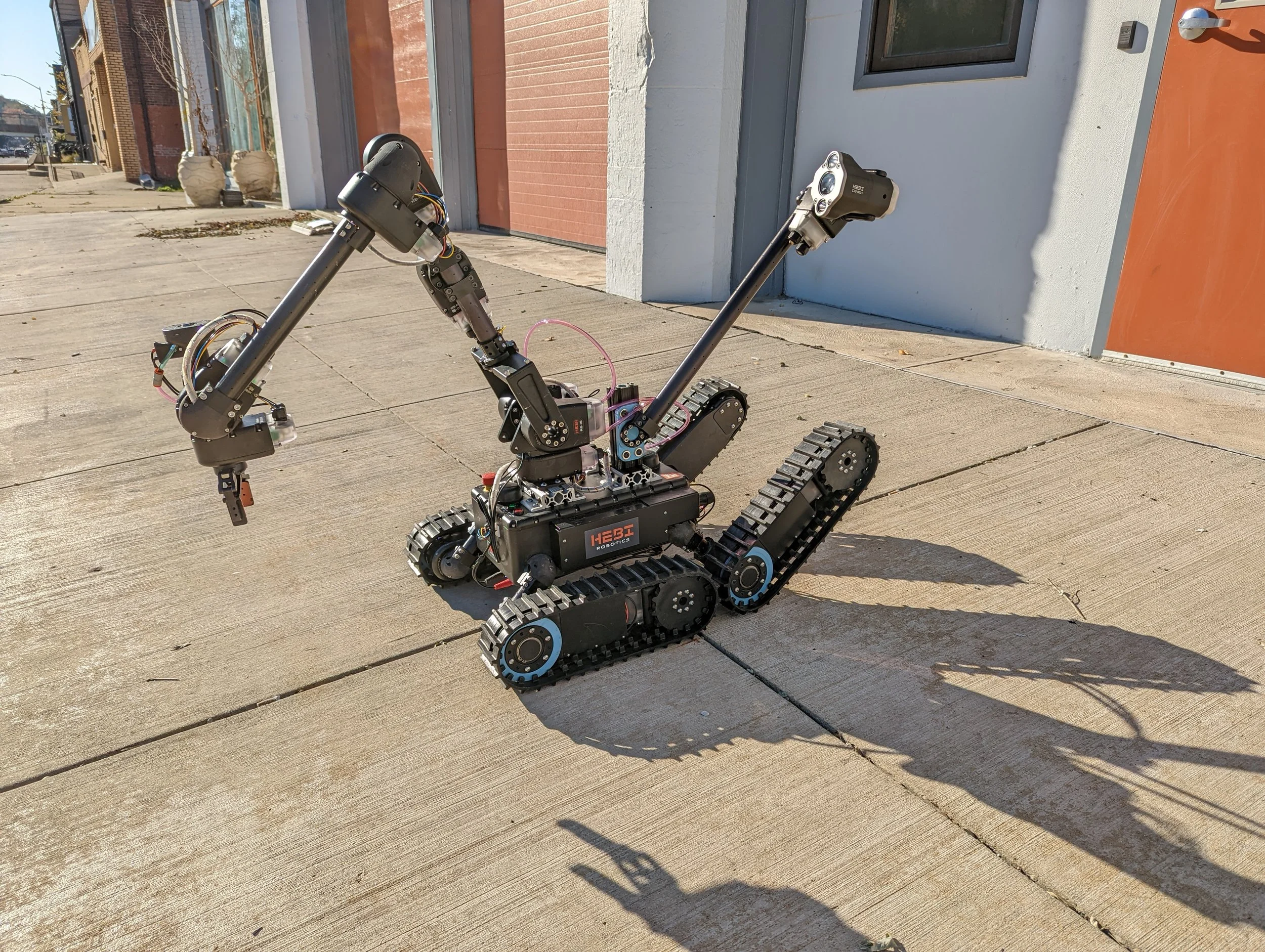
Tready proved an instant hit with the client. By articulating each treaded flipper, Tready can rotate in place in a length just inches longer than its body to maneuver on cramped landings or paths. Deploying the flippers horizontally nearly doubles its length and gives unmatched stability for stair and hill climbing. Additionally, the ability to articulate the 75mm wide flippers gives the capability of “reaching” up to climb over tall obstacles such as displaced tree branches or rubble. Tready is capable of all this while carrying payloads up to 20kg on a platform weighing only 25kg.
The success of the platform was quickly picked up on by customers around the globe in industries such as oil and gas, where Tready was utilized as a platform for remote soil analysis. Stability in a tight, maneuverable, package is a hallmark of treaded vehicles. Tready takes these qualities to the next level with its unique flipper design and robust R-Series Actuators powering treads and joints.
Tready now operates in wet, dirty, and dangerous environments around the globe. The short development timeline of Tready stands as another example of the capabilities of HEBI Robotics and the benefits of a modular approach to robot development.