


HEBI Robotics Case Study
Unique Inchworm Form of Mobile Manipulator
The challenge of movement has many approaches. When customers need to move within confined spaces to deliver a payload, robotic solutions have often failed to deliver adequate mobility. HEBI Robotics, with a unique approach to complex actuation, delivered the solution: the inchworm.
Download this case study
or continue reading below.
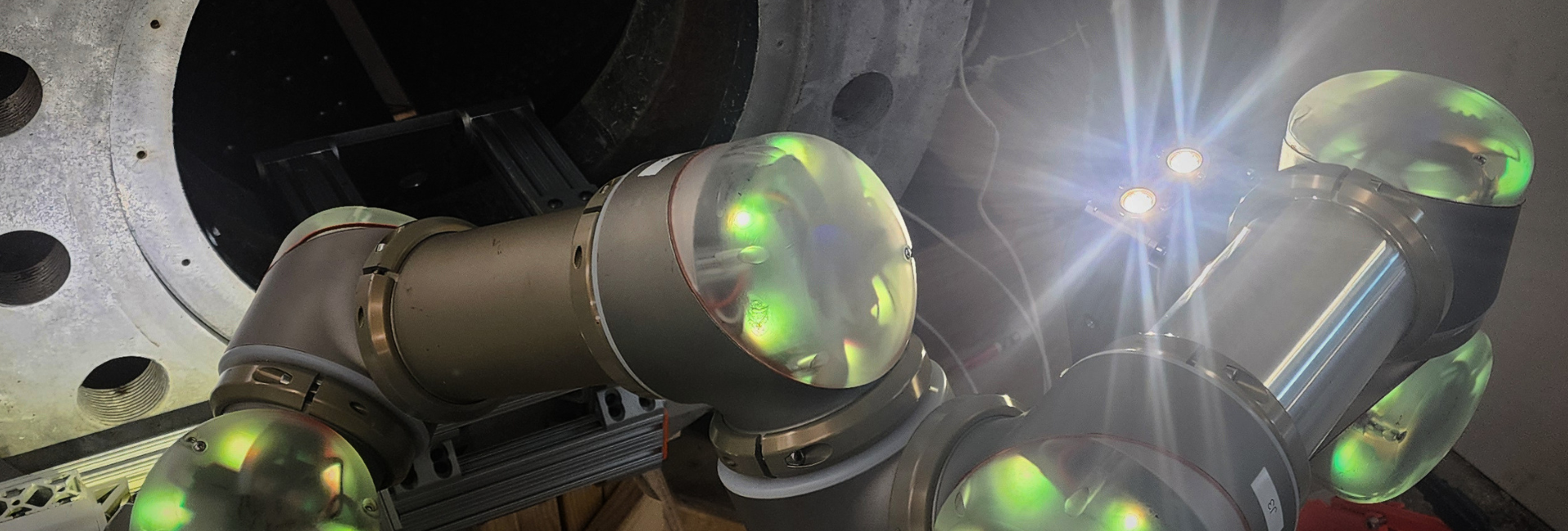
The Opportunity
Many industries require inspection and maintenance of spaces with complex geometry and confined dimensions. These include the internal hull structures of ships, pressure vessels, and networks of diverse piping. Magnetic crawlers struggle to climb over reinforcement ribbing or beams, fixed arms lack the reach and rigidity to explore longer spaces, and piping often features junctions that would stop an externally-mounted crawler in its tracks.
HEBI’s solution involves a robot moving within a space using an ‘arm over arm’ approach similar to how an inchworm climbs surfaces in nature.
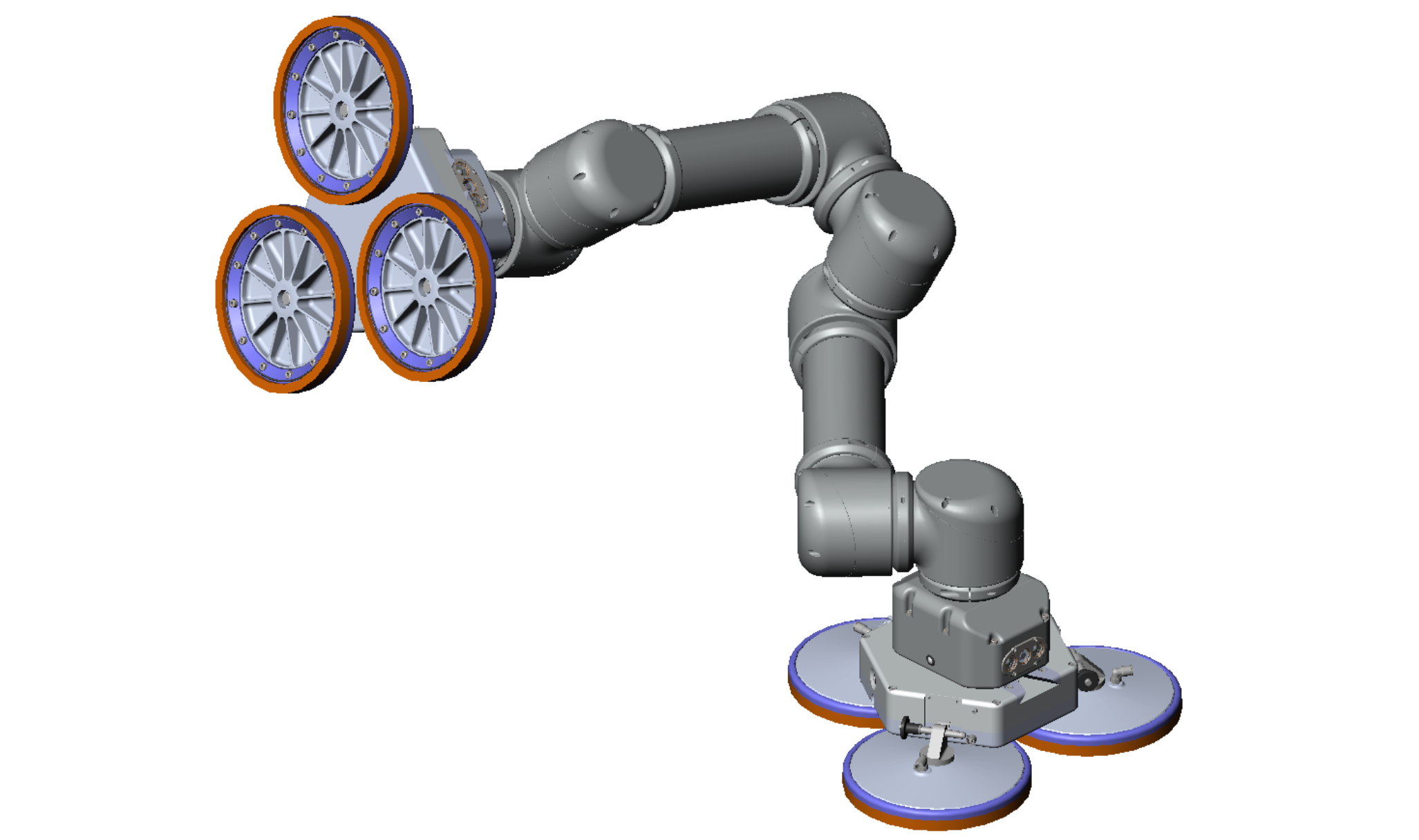
The Process
HEBI inchworms are capable of moving through virtually any space by gripping onto a surface with one end, reaching their other end to grasp another surface, and rotating a central joint to reach again with their first end. Repeating this movement allows them to move easily in any direction, as well as climb anywhere within the length of their bodies. This motion is powered by HEBI’s actuators and coupled with a range of end effectors for grip. These end effectors fall broadly into three categories and can be deployed with any of HEBI’s actuators to fit your end use case for payload and environmental durability requirements.
Example Inchworm Grippers (“Feet”)
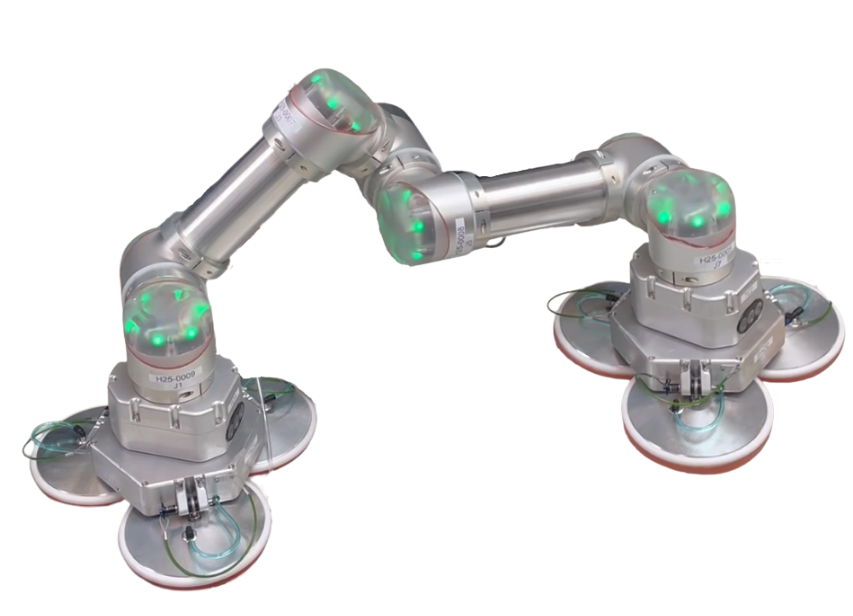
Quick-release couplings mean that the robot can be deployed with any combination of end effectors to move through variable spaces. Tools, sensors, additional arms and other Payloads can be held by either end, or ‘carried’ on the central section to move around a larger space.
Pneumatic
HEBI’s first study in inchworm design debuted with pneumatic end effectors. Dubbed “lily pads” for their visual design, they allow the robot to grab and hold onto any flat or minimally-curved space. This makes them ideal for inspections of tanks or other thin-walled surfaces where they can navigate around ribs and other internal structures. If there is a relatively flat surface at least the size of the pad, the robot can grip and move.
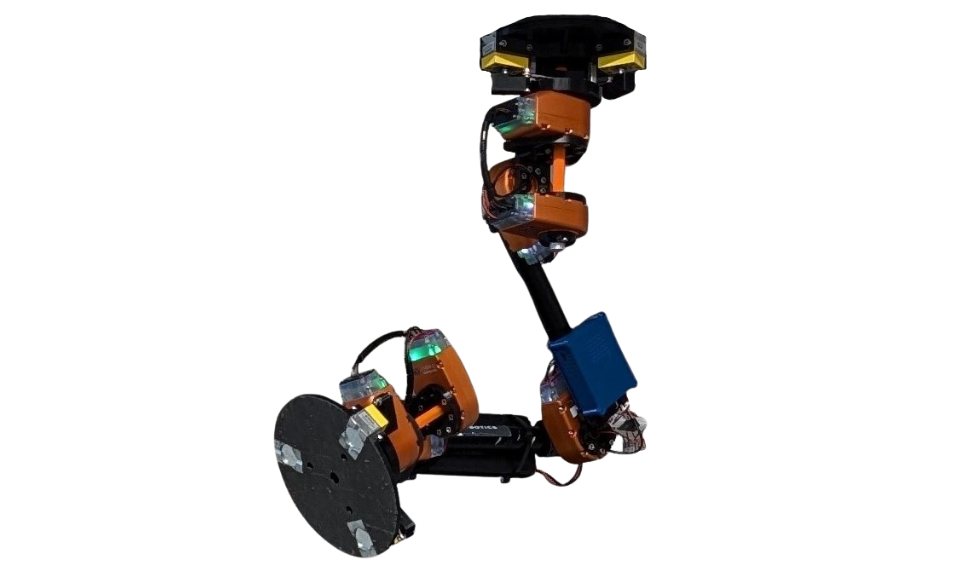
Magnetic
Magnetic feet allow a HEBI inchworm to move on any surface where sufficient Gauss strength can be employed. This approach, while inherently less broadly applicable than pneumatic grippers, is ideal for applications like ship hulls where the thicker metal allows the simpler mechanicals of a magnet system to function. Magnetic grippers are also energy-efficient as they require no power to maintain their hold.
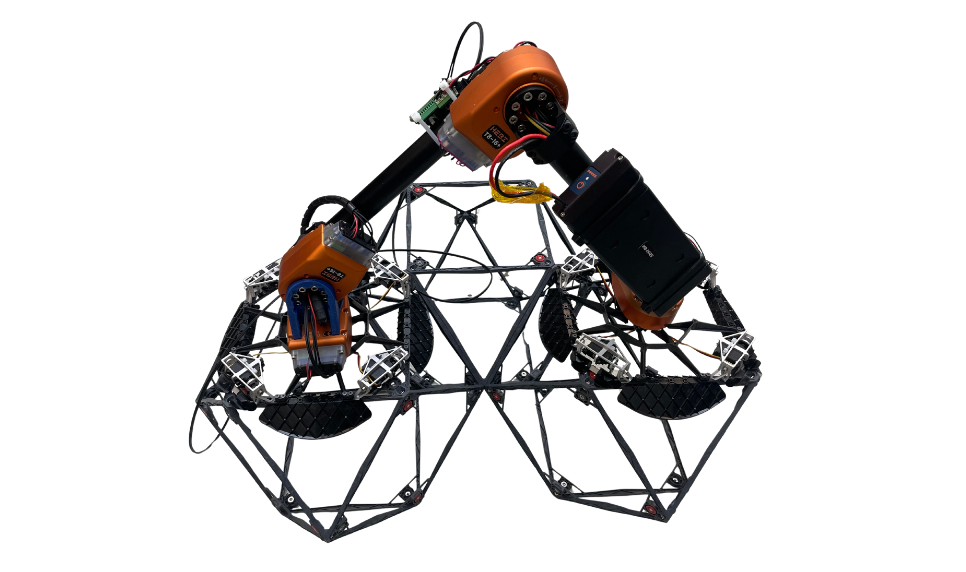
Mechanical
Multi-fingered grippers can hold on to surfaces such as pipes or ladders and allow the inchworm to operate in spaces where no suitable flat surfaces are available. They also allow for toolholding and collaborative work alongside human operators.
The Results
HEBI’s inchworm approach to mobility has been embraced by a range of industries. Notable examples include NASA, researchers, and industries seeking solutions for inspection and maintenance of hazardous or sensitive spaces.
In particular, one customer required the ability to move a specialized inspection payload into a confined space for a job previously done by highly-trained operators in bulky protective gear. The reality of the space dictated that the entire robot needed to fit through a narrow manway entrance and then be able to move freely within a delicate internal structure, complete with complex obstacles that could block traditional crawlers. The form factor of an inchworm gave them the flexibility they needed. A single operator can now remain safely outside the structure, deploying the robot at the manway, while the robot can complete critical inspection duties with total freedom of movement inside the structure.
This flexibility of movement in any direction on unconventional surfaces is a prime example of HEBI’s innovative approach to mobility. The inchworm sits as just one option for mobile manipulation within a broad range of solutions enabled by the HEBI platform for robot development. We encourage anyone looking for a practical way to deploy robots in the field to view HEBI’s tools for robot development and to get in touch on our contact page to discuss your next project.