


Modular Mobile Manipulator
Robot Case Study
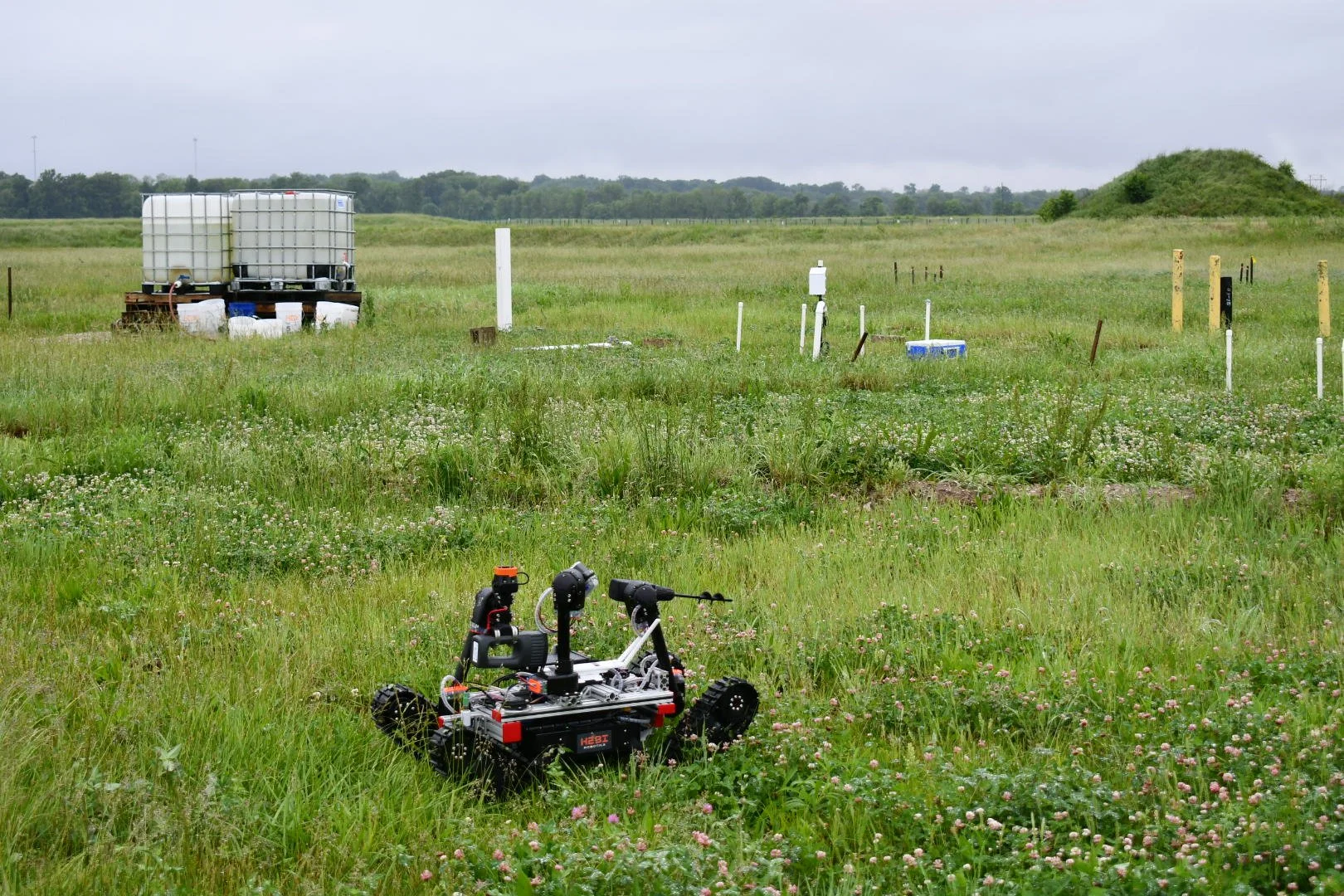
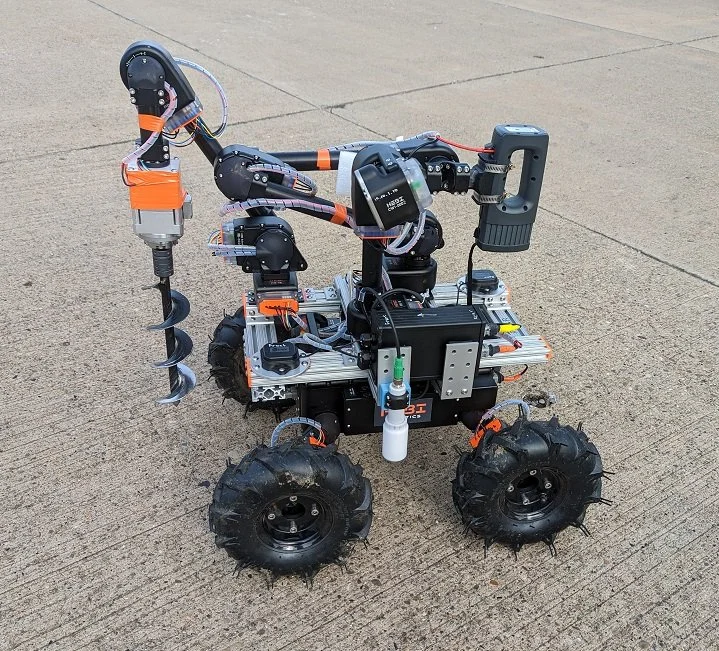
A major oil and gas company was looking to increase their automated capabilities for soil data gathering at a wide variety of sites around the world. HEBI Robotics created a custom solution in the form of a modular mobile manipulator with the option to swap sensors and even drive modes on the fly.
Download this case study
or continue reading below.
The Opportunity
Continued global expansion of this oil and gas giant meant an increasing workload for field testers. As part of the client’s efforts to advance technological capabilities with the goal of integrating data, reducing costs and enhancing safety they sought out a robot that could fulfill multiple roles. With a range of environmental conditions and terrains, as well as the need to deploy multiple sensor types, complex field sites posed a unique challenge for any mobile robot.
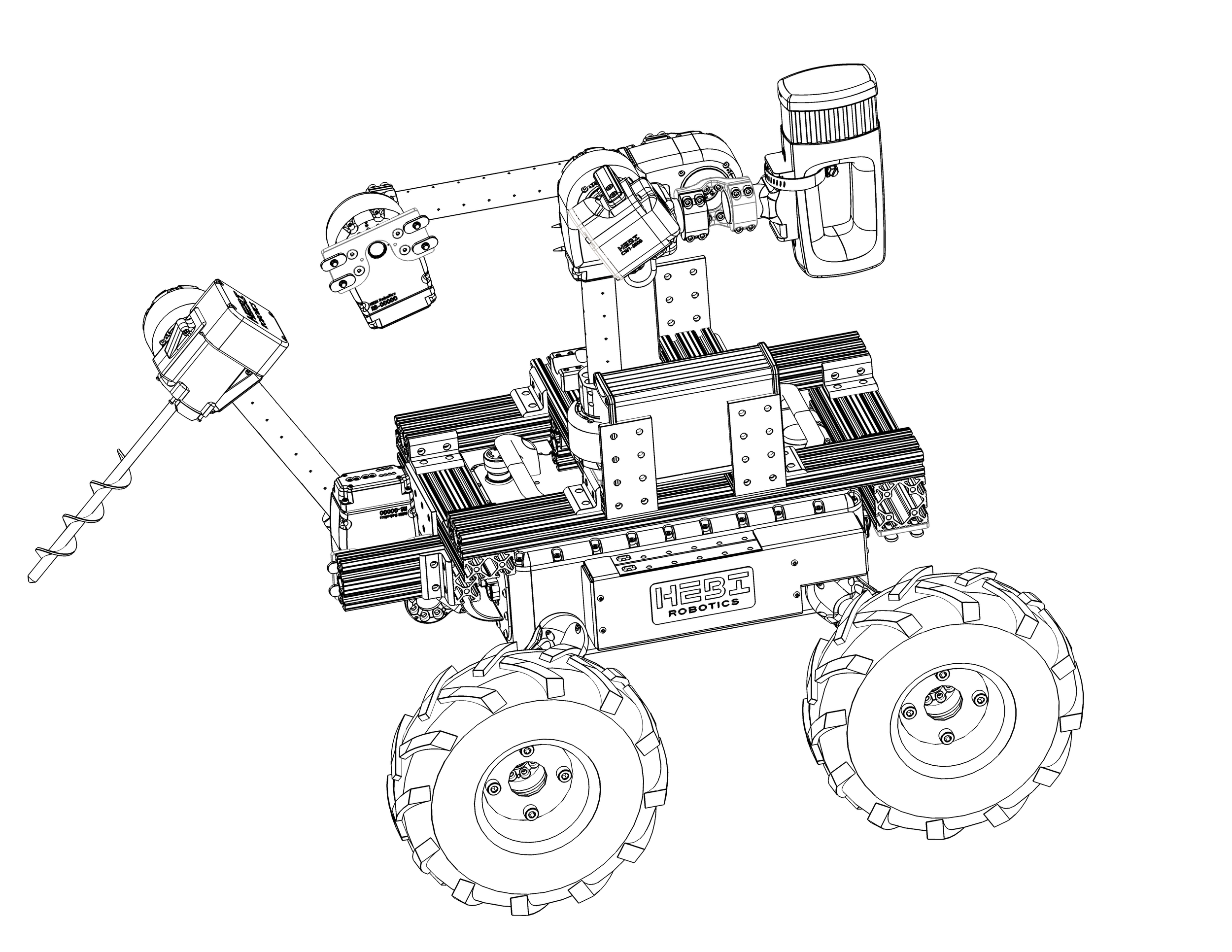
To develop a modular robot with the capability to easily swap components, HEBI started with the popular Tready mobile platform. This robot typically relies on flipper treads for movement, but the customer also wanted the ability to operate with low ground pressure wheels. A custom mount was developed that allowed the treads to be quickly swapped out and wheels be swapped in for use in sandy environments.
The Process
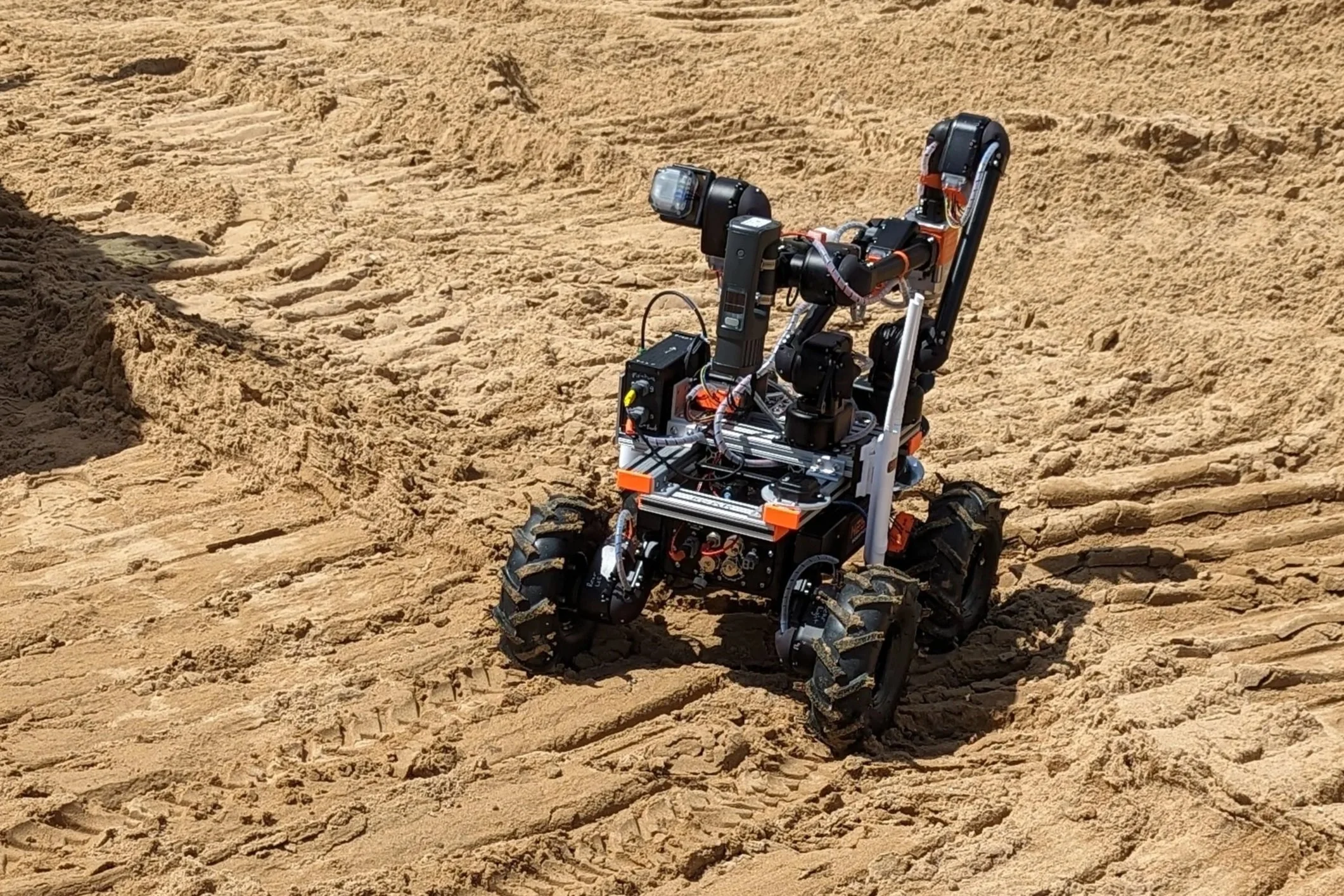
HEBI R-Series actuators were employed to actuate a series of arms mounted to a t-slot frame on the top of the robot. These arms were designed to carry cameras for visual inspection as well as a series of commercially-available sensors including CO2 and XRF (X-ray fluorescence).
To enable accurate readings with the XRF sensor, an auger was mounted to one of the robot’s arms to allow a hole to be drilled to expose lower layers of the topsoil for inspection. The auger was powered by an off-the-shelf drill modified to be mounted to the arm.
During the development process, the client also expressed interest in automated pathfinding, so a wayfinding automation was also developed to allow the robot to move between locations semi-autonomously.
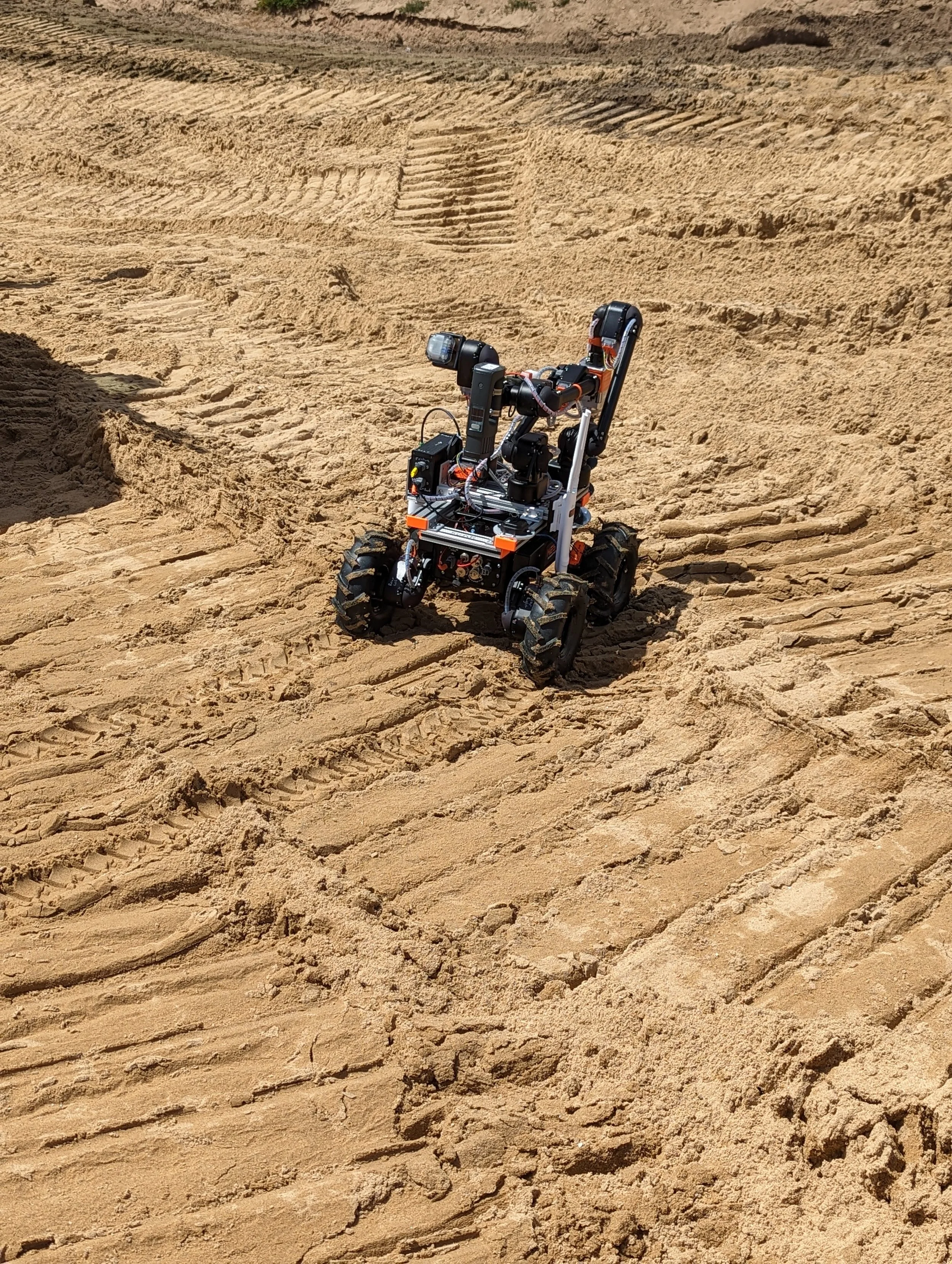
By utilizing HEBI’s modular family of actuation hardware and the Tready mobile platform, HEBI was able to develop the base of the robot in a few short months. Creation of additional automation protocols and testing took the bulk of the remaining few months of development time.
HEBI Robotics’ team provided training to the client’s field personnel and contractors to be able to deploy the robot at sites around the world. Because the robot was developed with a flexible drivetrain and range of available sensors, it was able to perform data collection in sites with diverse terrain ranging from dense undergrowth to desert environments.
The Tready-based system, now dubbed CESAR by the client, stands ready to traverse a range of environments and build a richer picture of soil conditions for data scientists to further their efforts in seeking out potential hazards.
The Result
If your company is looking to develop a custom robotic solution, reach out to the HEBI team to explore the possibilities of partnership. Contact us at info@hebirobotics.com or reach out through our website at hebirobotics.com.