
HEBI Robotics Case Study
Modular Pipe Crawler
For companies in the Oil and Gas Sector, understanding the elemental composition of surface deposits found in pipelines slated for retirement facilitates informed decision making.
That’s why HEBI Robotics developed an autonomous pipeline inspection robot to help a major multinational company continue to advance their technological capabilities with the goals of integrating data, reducing costs and enhancing safety.
Download this case study
or continue reading below.
The Opportunity
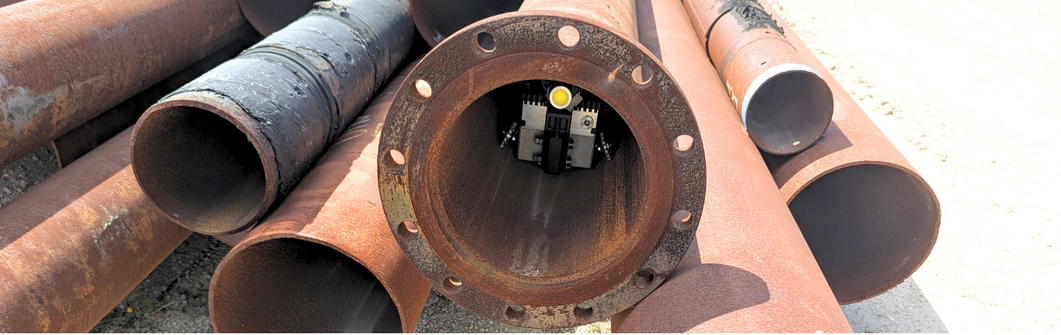
During the recycling of end-of-life pipeline sections, inspections are typically performed with handheld scanners to determine the mix of remaining elemental composition in the pipe. The process can be time consuming for scanner operators and involves small, handheld X-ray fluorescence (XRF) systems used to collect data.
Automation of this process can improve the speed of data collection as well as provide a more complete picture of any elements remaining in entire pipeline sections.

The Process
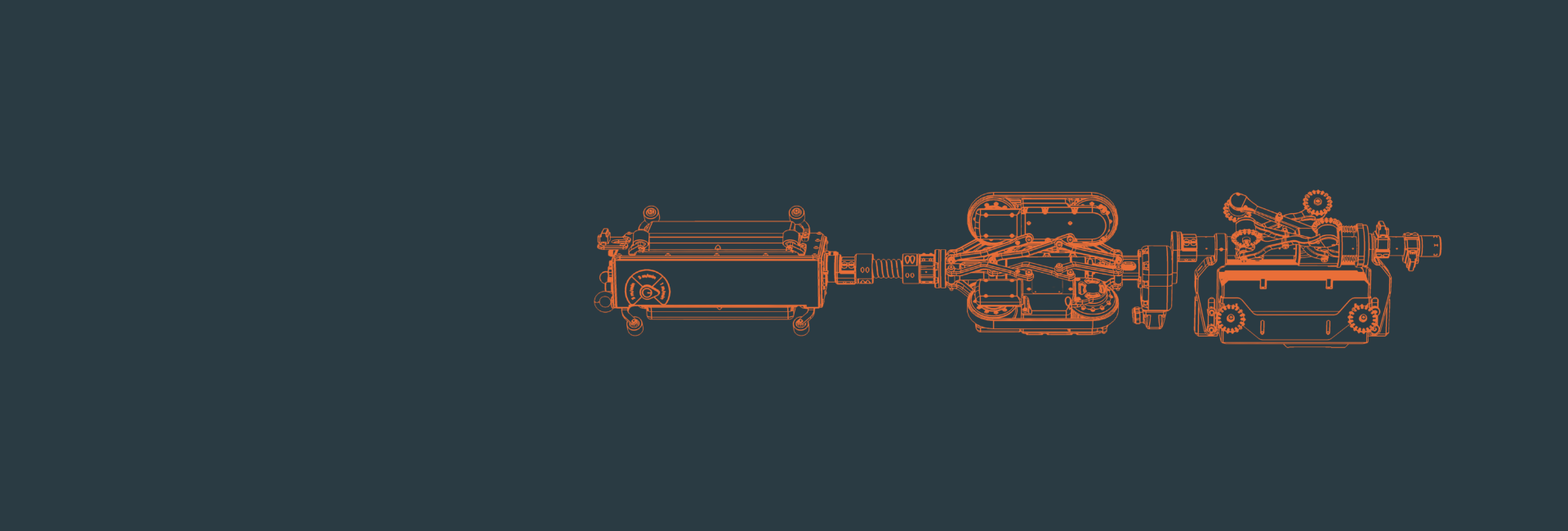
With internal diameters of the pipes to be inspected commonly ranging from 9in to over 12in, any robot navigating the sections would need the ability to alter its size to match the pipeline diameter. HEBI’s pipeline crawlers employ a combination of pneumatic actuators and electric actuators in their design. A pneumatic piston pushes HEBI’s bespoke “Tractuator” tracked actuators outwards against the interior of the pipe. This provides traction as well as allowing the robot to adjust to a range of pipe sizes.
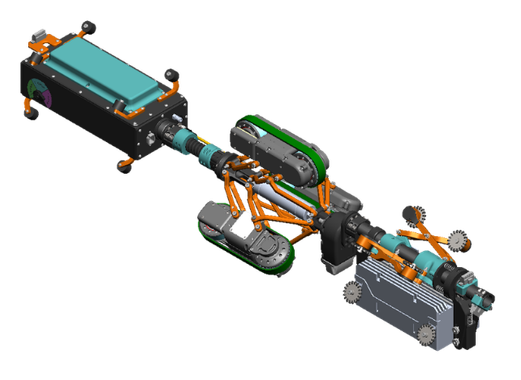
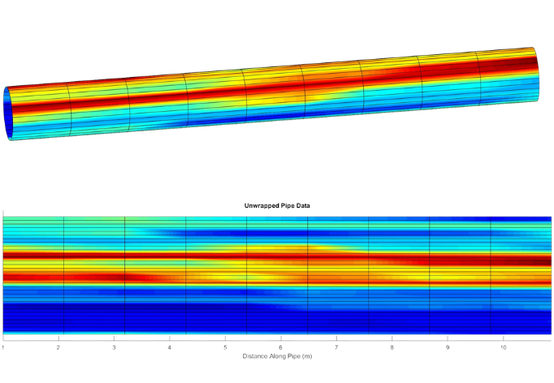
The sensor selected for data collection was a bespoke 3rd-party XRF scanner. By driving the robot the full length of the pipe, rotating the custom sensor array using a HEBI R-Series actuator, and driving back to the start of the pipe, the robot can build a “heat map” picture of elemental composition throughout.
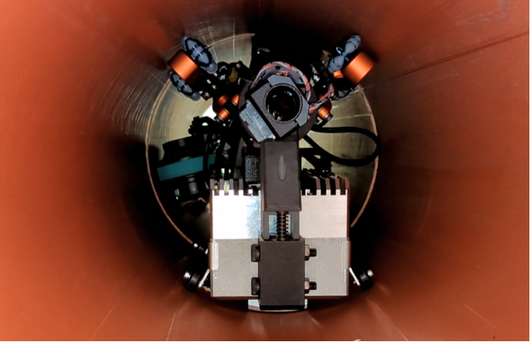
Developing the robot as a one-touch solution meant integrating sensing capability to determine the boundaries of the pipe as well as integrating with the data from the XRF scanner to build a complete data set. HEBI’s existing software and hardware tools allowed this custom robot to be developed in under 5 months from proposal to first deployment.
The Result
HEBI’s tracked platform was able to be delivered to the customer’s site on time and on budget. This rapid turnaround not only provided a faster time-to-robot, but allowed for ongoing iteration. The system’s inherent flexibility allows the robot to operate in a wide range of pipe sizes and be adapted for future uses as well.
The ability to scan entire pipe sections results in better data, provides a more reliable picture of trace elements, and allows for more confident, data-driven decisions about end-of-life pipeline sections. Recycling of these pipes can proceed with greater confidence and reduced risk with verifiable inspection data that they are ready for the next step in their journey.
This sort of rapid development of robots for specialized tasks is a hallmark of HEBI’s capabilities. By partnering with an existing supplier for the XRF sensor, HEBI was able to offer the client greater value with a complete robotic solution and shorter total development time than typical custom robotic hardware. If you are interested in learning how HEBI’s suite of hardware and software tools can help cut your robot development time and help provide a unique solution, contact us on our contact page. Looking to develop your own tracked crawler in house? Check out our Track Actuator on our shop page.