
HEBI Robotics Case Study
Heavy Duty Treaded Mobile Manipulator
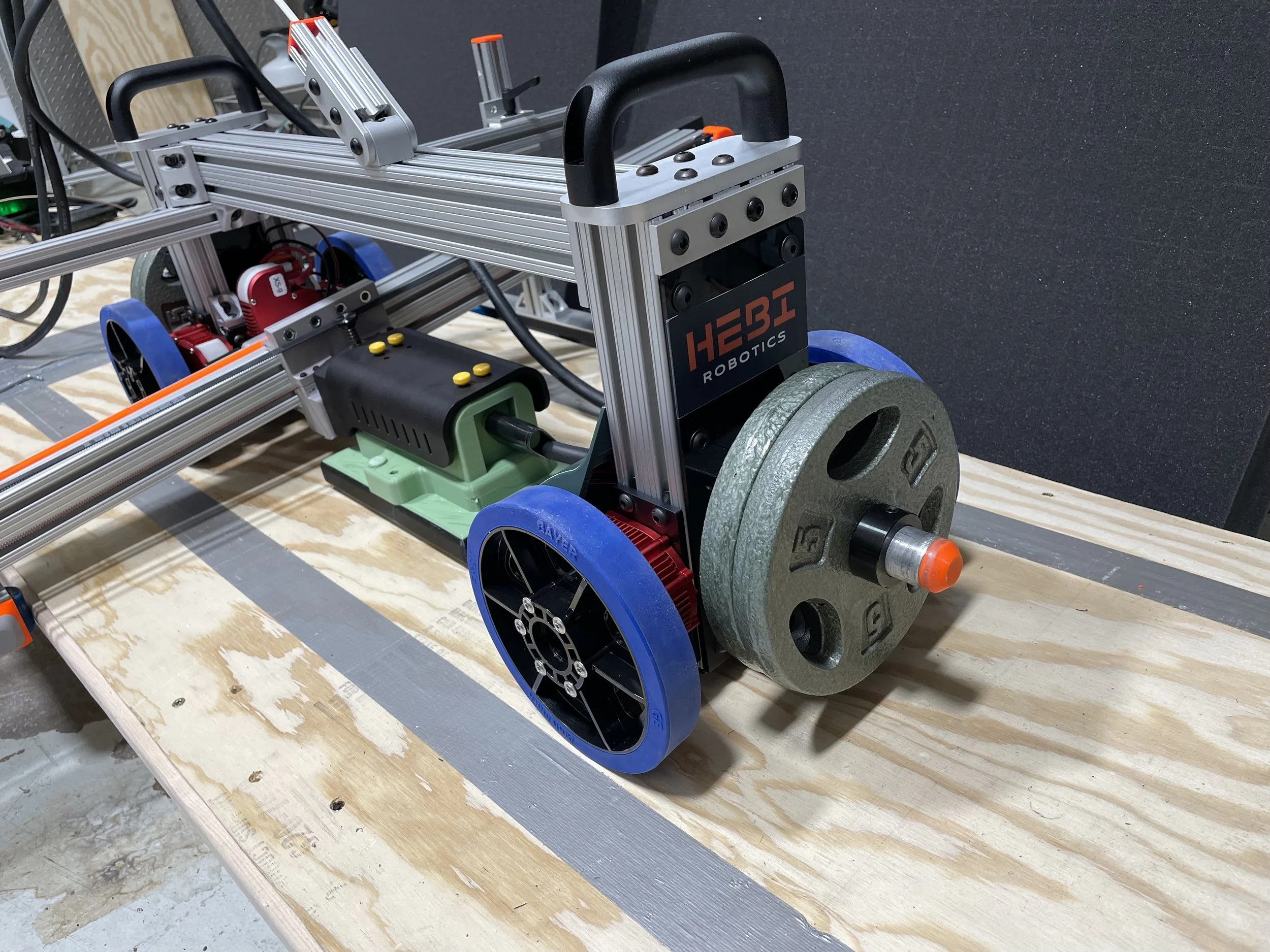
HEBI Robotics developed a robot for autonomous Phased Array Ultrasonic Testing (PAUT) inspection of a customer’s large horizontal structures during the manufacturing process. Equipped with a commercial-off-the-shelf (COTS) PAUT sensor, the robot platform detects defects like cracks, erosion, delamination, and other problems that are difficult to identify and quantify with traditional visual methods.
The result? Decreased inspection time and increased quality across the customer’s 10 facilities worldwide with the customer’s existing scanner and data platform retained.
Download this case study
or continue reading below.

The Opportunity
When a major client in the wind power industry wanted to automate the inspection of the spar cap (a major load bearing structural component) of wind turbine blades during their manufacturing process, their unique problem found no off-the-shelf solution that wouldn’t force them into a new scanning ecosystem.
The turbine blades were historically inspected manually with a Phased Array probe and a wheel encoder. In order to increase throughput and efficiency, an ideal automated solution would incorporate the customer’s existing inspection probe and wheel encoder with an automated method of moving the entire inspection system up and down the length of the spar cap with minimal (or no) human intervention.
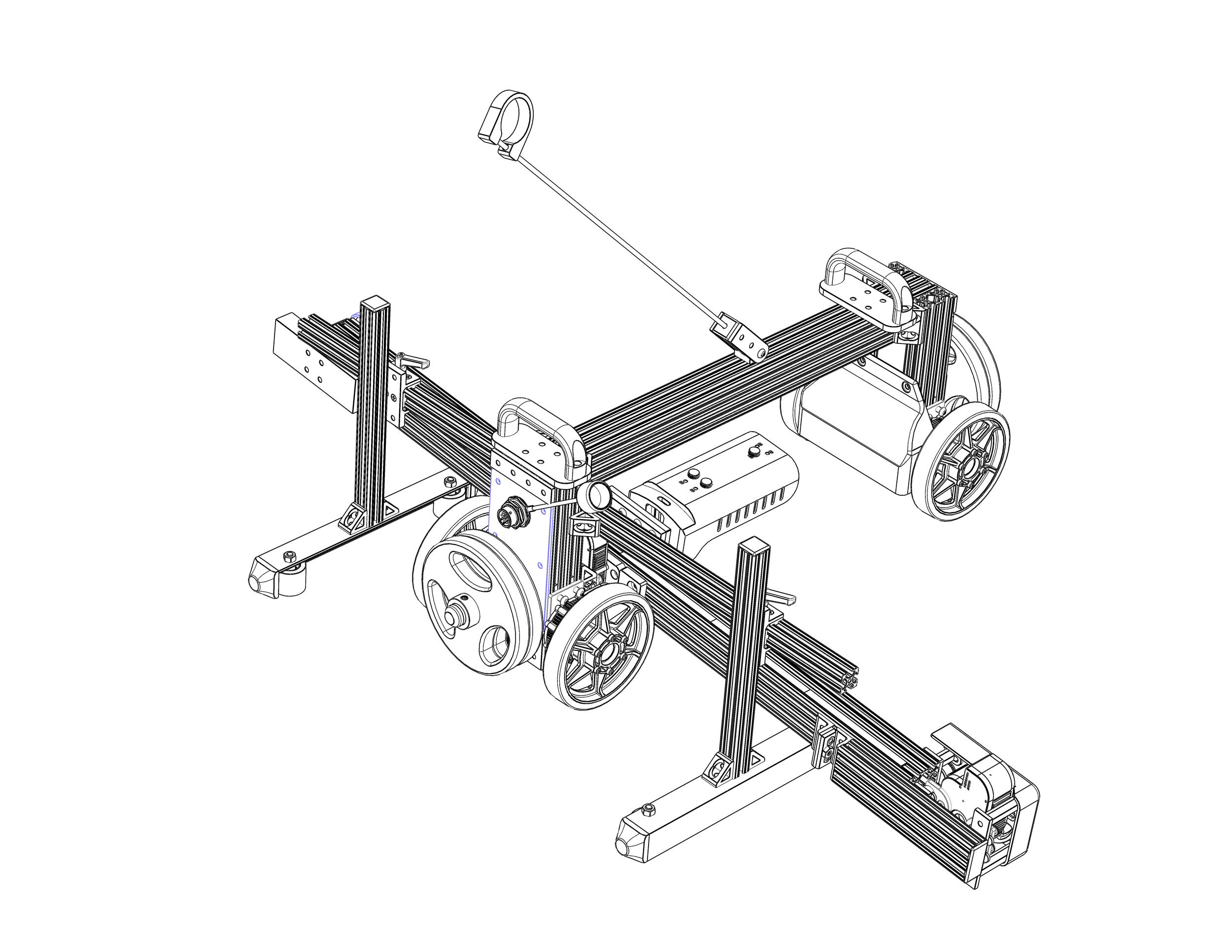
HEBI’s smart actuators were employed to develop a robotic scanner that traverses a spar cap—a structural component of wind turbine blades—while performing a raster scan with the customer’s existing phased array probe equipment and software stack. This inspection task is a critical part of the manufacturing process but can be time consuming and error prone when completed manually.
The Process

HEBI’s solution combined an innovative mobile robotic crawler that traverses the long (up to 80m) and narrow (600-800mm) spar cap while moving a phased array probe back and forth in a rastering motion collecting data for the length of the asset. This system was designed over the course of 12 months and quickly deployed to ten of the customer’s production facilities across the globe.
The rapid design and deployment of the project was enabled by connecting HEBI’s robust platform with the customer’s off-the-shelf Olympus phased array scanner.
The project developed a system to automate the horizontal inspection of 80m x 800mm spar cap assets during the manufacturing process.
Goals for the development and deployment of the robotic platform included:
Rastering a phased array ultrasonic (PAUT) probe across the entire surface of the spar cap for a predetermined section, e.g. 5m x 800mm.
Inspecting an entire spar cap in 90 minutes or less, requiring a scan speed of 150-300mm/sec using existing PAUT probes.
Interfacing with encoder inputs of an existing customer-owned Omniscan scanner, enabling seamless customer-owned datasets.
Operating on a simple tablet-based user interface allowing the start/stop of scans of a predetermined size, (e.g. 5m x 800mm) and adjustment of scan speed.
This project directly addressed the customer’s need to improve wind turbine plant maintenance and reduce operational costs. By automating time-consuming and subjective inspection tasks, the robot enhances worker productivity while minimizing facility downtime.
The robot’s modular design enables customization for their different facilities and product shapes/sizes while providing a scalable pathway to increasingly autonomous inspection, thus ensuring long-term adaptability to industry advancements.
The HEBI twist was the ability to develop a robot around the customer’s existing sensor equipment. This provided a seamless integration with existing workflows with no new sensor system to learn or purchase. Additionally, the customer continued to retain ownership of their scanning dataset; an increasingly valuable commodity as the future of manufacturing is defined by data.
The Result
HEBI Robotics’ platform offers a unique combination of versatility, precision, and scalability, positioning it as a valuable tool for wind plants and other industrial operators. By reducing maintenance costs, improving inspection accuracy, and enhancing safety, HEBI Robotics contributes to the broader goal of making manufacturing safer and more reliable around the world.